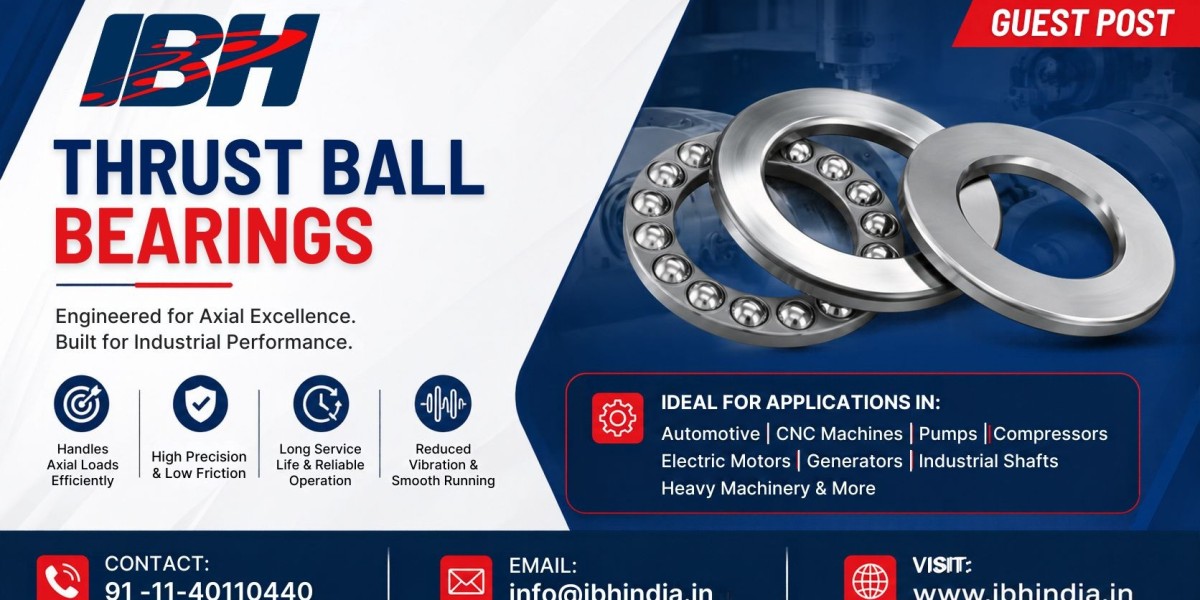
How Thrust Ball Bearings Improve Machine Performance
A machine running at 92% of rated output isn't broken. It's carrying friction it shouldn't be carrying, and half the time that friction is sitting inside a bearing that was never matched to the axial load in the first place. Thrust ball bearings exist to absorb force along the shaft axis, and when they're sized correctly, that absorption shows up as smoother torque delivery, lower operating temperature, and fewer micro-stoppages that never make it onto a maintenance report but quietly eat into output all the same. Most plant engineers troubleshoot performance drops by checking the engine first. The bearing rarely gets a second look until it seizes.
That's backwards. Here's what actually changes on the floor when the thrust bearing is right.
Where Performance Actually Leaks Out of a Machine
Vibration is the tell. A thrust ball bearing running under-specified for its axial load starts generating micro-vibration long before it fails outright, and that vibration translates into energy loss, uneven wear on adjacent components, and output that drifts lower without any single alarm triggering.
Load Direction and What It Does to Efficiency
Thrust ball bearings come in single-direction and double-direction configurations, and mismatching either one against the actual load path is the fastest way to lose efficiency. A single-direction bearing forced to absorb reversing thrust — common on machine tool spindles that weren't audited after a retrofit — wears asymmetrically within months, and that asymmetry shows up as chatter and dimensional drift on the finished part.
The Overlooked Variable: Preload
Preload is the spec buyers skip because it doesn't appear on a basic datasheet the way bore diameter does. Too little preload and the bearing skids instead of rolling under light load, generating heat and surface damage. Too much, and friction climbs, pulling down the exact efficiency the bearing was supposed to protect. Getting preload right is closer to tuning an instrument than picking a part off a shelf.
What a Correctly Specified Bearing Does for Your Output Numbers
Performance gains from a properly matched thrust ball bearing aren't cosmetic. They show up in numbers a plant manager actually reports upward.
- Lower energy draw per cycle. Reduced friction from correct preload means the motor isn't compensating for drag it shouldn't have to overcome, which shows up directly on the power bill.
- Tighter dimensional tolerance on finished parts. Less axial play means less chatter, which matters enormously on precision machining lines where a few microns decide whether a part passes inspection.
- Fewer micro-stoppages that never get logged. These don't trigger downtime reports, but they add up across a shift and quietly drag output below target.
- Reduced heat generation. Lower operating temperature extends grease life, which pushes out the next scheduled maintenance interval without anyone having to ask for it.
- Better load distribution across the assembly. A correctly rated thrust bearing protects the radial bearings sitting next to it from taking on axial force they were never built to handle.
Why Sourcing Location Changes How Fast You Can Fix a Performance Problem
A performance issue traced back to a bearing doesn't wait for a convenient shipping schedule. The plant is already running below target the day the diagnosis lands, and every extra day spent waiting on a replacement compounds that loss.
The more you make your inventory away from other key industrial corridors (steel, cement, mining or paper & pulp) it will take more than weeks and the time will be reduced to days. Our inventory model is made in this way and not by what is convenient or easy to hold centrally.
Who's Behind the Bearings We Sell
We're an authorized supplier of premium bearings in India, and our catalog leans heavily toward parts engineered for heavy radial and axial loads because that's where our customers actually operate — mining, steel, cement, and paper, not light assembly work. We started flagging preload mismatches proactively in 2023 after a repeat customer in the paper industry came back twice in one year with a bearing that "met spec" on paper but ran hot in practice. We changed how we quote preload class since. That's not something you'll find on our website's homepage — it's something you find out by asking us directly.
As Nachi Thrust Ball Bearings Suppliers , we don't treat every order the same way. A performance-critical machining line and a slow-turning conveyor system need different attention even when the part number looks similar, and we'd rather ask an extra question upfront than sending the wrong preload class and finding out later.
The Bottom Line on Bearing Performance
Thrust ball bearings don't just prevent failure — they set a ceiling on how efficiently a machine can run in the first place. Buyers who only think about bearings when something breaks are leaving output on the table every day between failures. Getting preload, load direction, and speed rating right at the sourcing stage is the cheapest performance upgrade most plants never make.
FAQs
Can a thrust ball bearing actually improve output, or does it only prevent breakdowns?
Both. Correct preload and load matching reduce friction losses that show up as measurable efficiency gains, not just fewer failures. Plants that only think about bearings reactively usually miss this.
How do I know if my current thrust ball bearing is undersized for the application?
Rising operating temperature and vibration readings that drift upward over weeks, not spike suddenly, are the usual signs. If nobody's tracking vibration baselines, that's a gap worth closing before it costs you a machine.
Are you Nachi Thrust Ball Bearings Dealers for both standard and custom preload classes?
We stock standard preload classes as Nachi Thrust Ball Bearings Dealers, and can source custom classes on request, although lead time extends for non-standard specs — we won't promise a stock timeline on those.
What's the difference in performance between single- and double-direction thrust bearings?
Single-direction bearings handle load from one side efficiently but degrade quickly under reversing thrust. Double-direction bearings handle both directions but carry a slightly higher baseline friction under light load — the right choice depends entirely on your load pattern, not on which one sounds more capable.
Do Nachi Thrust Ball Bearings Suppliers in India typically stock preload-matched inventory?
Not universally. Many suppliers stock by bore size alone and treat preload as an afterthought. We stock and quote by preload class specifically because it's the variable that actually determines performance outcomes.