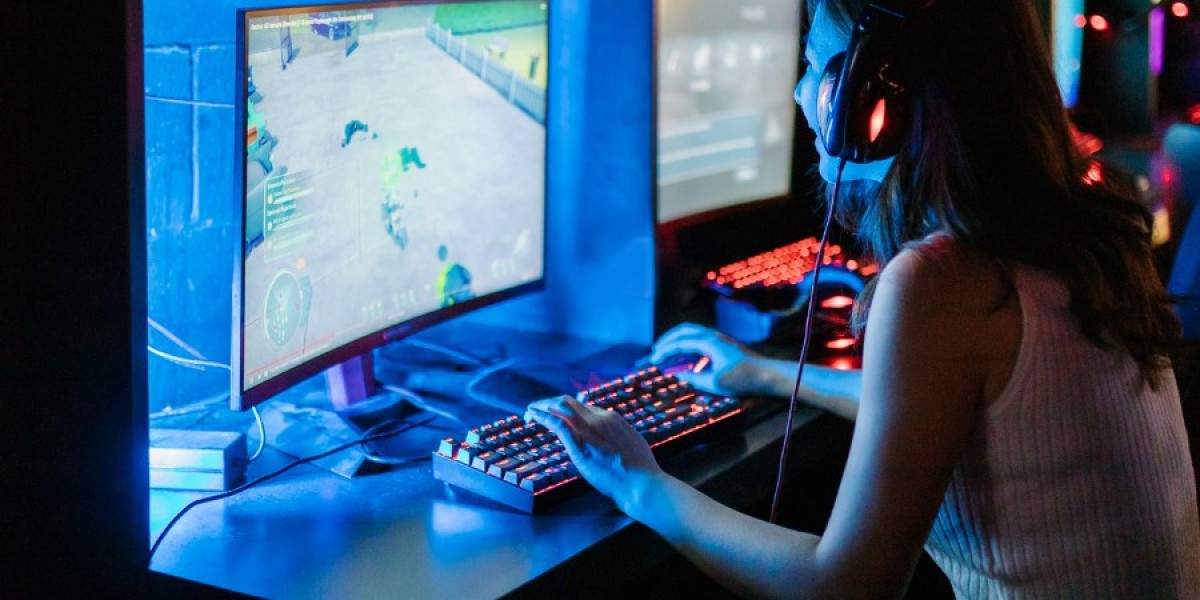
Cloud gaming is changing the way video games are delivered, played and monetized. Instead of requiring users to download large game files or depend entirely on local hardware to render graphics, cloud gaming runs games on remote data-center infrastructure and streams the resulting gameplay to connected devices. This model can reduce hardware barriers and allow players to access sophisticated games through smartphones, tablets, computers, consoles and other compatible devices.
The global cloud gaming market reached approximately USD 2.36 billion in 2025 and is projected to expand at a remarkable CAGR of 36.80% from 2026 to 2035, reaching nearly USD 54.18 billion by 2035. This rapid expansion reflects the convergence of high-speed internet, edge computing, increasingly capable cloud infrastructure and changing consumer expectations around digital entertainment.
Cloud gaming is particularly significant because it separates gaming performance from the physical device to a greater extent than traditional gaming. A user with a compatible device and sufficiently fast, stable internet connection can potentially access games that would otherwise require a powerful gaming PC or console.
The market encompasses different delivery models and user groups. Video streaming is the dominant approach, while file streaming represents another model. Consumers range from casual players who want convenient access to games to avid gamers who demand high performance and lifestyle gamers who incorporate gaming into broader digital entertainment habits.
The technology behind cloud-based gaming
Cloud gaming works by shifting much of the computational workload from the user's device to remote servers. The game is executed in a cloud data center, while video and audio output are transmitted to the player. Inputs from a controller, keyboard, touchscreen or mouse travel back to the server, creating an interactive feedback loop.
This architecture means that the user's device does not necessarily need the same level of graphics-processing capability required to run the game locally. A smartphone, for example, can potentially stream a graphically demanding title if the cloud platform, network connection and device support the required service.
The quality of this experience depends heavily on latency, bandwidth and network stability. Latency is particularly important because there is a delay between a player's input, server processing and the resulting image being displayed. For turn-based or less time-sensitive games, moderate latency may be acceptable. Competitive action games, racing titles and first-person shooters require much tighter responsiveness.
Advances in 5G, fiber broadband, Wi-Fi and edge computing are therefore directly relevant to the cloud gaming market. Edge computing can bring processing resources closer to users, reducing the physical distance that data must travel and potentially improving responsiveness.
Data-center GPU performance is another essential component. Cloud providers need substantial computing resources to support multiple concurrent players, especially when games require high-resolution rendering and advanced graphics. Improvements in GPU virtualization and server architecture are helping providers increase resource utilization.
Device flexibility is expanding the potential audience
One of cloud gaming's strongest advantages is its ability to extend gaming beyond traditional high-performance hardware. Smartphones and tablets are increasingly important access points, while personal computers, laptops and gaming consoles continue to support cloud-based services.
Smartphones have particular potential because of their enormous installed base. Players can access games without carrying a dedicated gaming PC or console, although screen size, battery consumption, controller compatibility and network quality can influence the experience.
Tablets occupy a similar position but can provide a larger display, making them attractive for certain genres. As mobile processors and high-refresh-rate screens improve, tablets can increasingly function as versatile gaming clients.
Gaming consoles can also use cloud services to complement local hardware. Cloud technology can support game streaming, remote access and potentially reduce the need for users to download complete game files before playing.
Personal computers and laptops remain important because they combine large displays, flexible input methods and widespread broadband access. Cloud gaming can be particularly attractive for users whose computers are suitable for general productivity but lack the dedicated GPU performance required by modern games.
The ability to use multiple device types supports a broader concept of gaming continuity. A player may begin a game on a television or computer and continue on a mobile device, depending on platform compatibility and service design.
This cross-device potential is an important reason the cloud gaming market extends beyond traditional gaming demographics. The technology can make gaming more accessible to users who previously viewed dedicated hardware as too expensive or inconvenient.
Streaming models are shaping the cloud gaming experience
Cloud gaming services can use different approaches to deliver game content, with video streaming representing the most recognizable model. In this approach, the game runs remotely and the player receives a continuous video stream rather than running the game locally.
Video streaming offers the clearest distinction from conventional gaming. Users can interact with a remote game while their device primarily handles decoding the incoming video and transmitting controls. This reduces local hardware requirements but makes the experience highly dependent on network performance.
File streaming represents another approach, allowing portions of game content to be delivered as needed rather than requiring the entire title to be downloaded before use. This can reduce initial waiting times and storage requirements while still relying to a greater extent on local execution.
The distinction between these models can become less clear as gaming platforms adopt hybrid architectures. Some services can combine local and cloud processing depending on the game, device and network conditions.
Cloud gaming also changes game distribution economics. Instead of purchasing a physical copy or downloading a large file, users may access games through subscriptions, individual purchases or bundled entertainment services. This can create recurring revenue opportunities for platform providers and publishers.
However, subscription economics remain challenging. Providers must balance affordable consumer pricing against substantial infrastructure expenses associated with GPUs, data centers, bandwidth and content licensing.
Different gamer groups are adopting cloud gaming differently
The cloud gaming market serves a diverse user base, and adoption patterns vary according to gaming intensity, spending behavior and expectations around performance.
Casual gamers can benefit significantly from the convenience of cloud platforms. These users may not want to purchase expensive hardware or maintain a dedicated gaming setup. For them, the ability to access games through an existing smartphone, laptop or smart TV can make gaming easier to adopt.
Avid gamers have different priorities. They are more likely to evaluate services based on latency, frame rates, image quality, controller responsiveness and game availability. Cloud gaming must therefore meet demanding performance expectations if it is to become a meaningful part of the enthusiast gaming ecosystem.
Lifestyle gamers occupy an increasingly important middle ground. Gaming is often integrated into broader entertainment routines involving streaming video, social platforms and mobile devices. Cloud gaming can fit this behavior by making games accessible across multiple screens and locations.
Cloud gaming can also help address hardware cycles. Traditional gaming often requires consumers to upgrade PCs, graphics cards or consoles to run newer titles. Cloud platforms can shift some of that upgrade burden toward the service provider.
Nevertheless, dedicated hardware remains valuable. Enthusiast gamers may prefer local processing because it provides predictable latency, high image quality and independence from internet conditions. Cloud gaming is therefore more likely to complement traditional gaming than eliminate it entirely in the near term.
Major growth drivers are converging around cloud infrastructure
The rapid projected growth of the cloud gaming market is being supported by several technological and consumer trends occurring simultaneously. Improved broadband availability is one of the most important because cloud gaming is fundamentally dependent on reliable connectivity.
The expansion of 5G networks can make mobile cloud gaming more practical by increasing bandwidth and reducing latency in supported environments. Although real-world performance varies by location and network congestion, faster mobile connections create more opportunities for interactive streaming.
Cloud infrastructure is also becoming more geographically distributed. Data centers and edge-computing locations closer to population centers can reduce latency and improve service consistency.
Another driver is the rising cost of high-end gaming hardware. Modern gaming PCs and GPUs can require substantial investment, particularly when consumers want to play graphically intensive games at high resolutions. Cloud services offer an alternative model in which expensive computing infrastructure is shared among users.
Game development itself is becoming more sophisticated. Larger game worlds, advanced physics, high-resolution textures and increasingly realistic graphics require substantial computing resources. Cloud infrastructure can provide developers and publishers with scalable processing capacity.
Cross-platform gaming is also strengthening the case for cloud services. Consumers increasingly expect their digital entertainment to follow them across devices, and cloud architectures can help publishers provide more consistent access.
Regional markets are developing at different speeds
North America, Europe and Asia Pacific are important cloud gaming markets, but adoption is influenced by broadband infrastructure, gaming culture, disposable income, data-center availability and regulatory conditions.
North America has a strong foundation because of widespread broadband access, a large gaming population and the presence of major technology companies. The region is home to several companies involved in cloud infrastructure, gaming platforms and graphics processing, creating an established ecosystem for cloud gaming development.
The United States is particularly important because major technology and gaming companies have invested in cloud infrastructure and digital distribution. Consumer familiarity with subscriptions and digital entertainment can also support adoption.
Europe has a mature gaming market and extensive broadband infrastructure, although adoption varies between countries. Western European markets tend to have strong internet connectivity and established digital entertainment ecosystems. Data-privacy regulation and regional competition can influence how cloud gaming services are developed and marketed.
Asia Pacific offers some of the strongest long-term opportunities because of its large population of gamers and rapidly expanding digital infrastructure. China, Japan, South Korea and India have substantial gaming communities, although their markets differ considerably.
South Korea has particularly advanced broadband infrastructure and a deeply established gaming culture. Japan combines a sophisticated gaming industry with strong mobile usage, while China has a large gaming population and major domestic technology companies.
India represents an emerging opportunity as smartphone penetration, affordable mobile data, and digital entertainment adoption continues to increase. Cloud gaming could provide access to more sophisticated titles for consumers who may not own high-end gaming hardware.
Latin America and the Middle East and Africa have growing gaming populations but can face challenges involving broadband quality, affordability and network infrastructure. Continued investment in connectivity should determine how quickly cloud gaming becomes mainstream across these regions.
The competitive landscape is dominated by technology and gaming giants
Competition in the cloud gaming market spans hyperscale cloud providers, graphics technology companies, game publishers and specialized streaming platforms. The market is therefore shaped by both infrastructure capabilities and access to compelling game content.
Microsoft Corporation has a major position through its cloud infrastructure and gaming ecosystem. Its Xbox Cloud Gaming service demonstrates how cloud delivery can be integrated with a broader gaming subscription and console platform.
Amazon brings substantial cloud infrastructure capabilities through AWS, while NVIDIA contributes GPU technology and cloud gaming platforms. NVIDIA's GeForce NOW model illustrates the potential for streaming PC games from remote GPU infrastructure.
Google has extensive cloud and data-center expertise, although its consumer cloud gaming strategy has evolved over time. The company's technology remains relevant to the infrastructure side of the market.
Sony Interactive Entertainment has a significant role because of its PlayStation ecosystem and cloud gaming capabilities. Sony's position highlights the importance of combining established gaming content and consumer relationships with cloud delivery.
Tencent Holdings is particularly important in Asia because of its substantial gaming portfolio and technology infrastructure. Alibaba similarly contributes cloud-computing capabilities to the regional ecosystem.
Other participants include Ubisoft Entertainment , Ubitus , Shadow and technology providers such as Intel and IBM . Their roles vary from game publishing and cloud infrastructure to specialized streaming platforms.
Competition increasingly depends on three factors: infrastructure quality, content availability and economics. A technically impressive streaming service will struggle if it lacks games consumers want, while a large game library may not compensate for poor latency or inconsistent streaming quality.
Challenges could determine the pace of adoption
Cloud gaming has substantial potential, but its growth is constrained by technical, economic and consumer challenges. Network dependence is perhaps the most important. Unlike local gaming, cloud gaming can become difficult or impossible when connectivity is weak or unavailable.
Latency remains another concern. Even small delays can affect competitive gameplay, making cloud services less attractive to serious esports players or users with demanding performance expectations.
Bandwidth consumption can also be significant. High-resolution game streaming requires substantial data transfer, potentially creating affordability issues in markets where broadband data is expensive or subject to usage limits.
Infrastructure costs create another challenge for providers. Running GPUs in data centers and delivering high-quality video streams to large numbers of users requires substantial capital and operational expenditure. Providers must achieve high utilization rates to make the economy sustainable.
Content licensing can also complicate the market. Cloud gaming providers need agreements with publishers and developers, and game availability may vary across services and geographic markets.
Consumer expectations represent an additional hurdle. Players accustomed to local gaming may compare cloud services directly with dedicated hardware. Any visible compression, input delay or frame-rate instability can affect perceptions of quality.
Security and privacy are relevant as well. Cloud platforms process user accounts, payment information, game data and potentially behavioral information. Strong cybersecurity and transparent data practices are essential as services scale.
The market outlook through 2035
The cloud gaming market is positioned for rapid expansion, with its value projected to rise from approximately USD 2.36 billion in 2025 to USD 54.18 billion by 2035 at a CAGR of 36.80%. Such growth would represent a major expansion of cloud-based gaming as a mainstream digital entertainment model.
The most important development will likely be the improvement of the underlying infrastructure. Faster networks, distributed data centers, edge computing and increasingly capable GPUs can gradually reduce the technical limitations that have historically affected game streaming.
Mobile devices should remain an important adoption channel because they provide a huge installed user base and eliminate the need for dedicated gaming hardware. However, PCs, laptops, consoles and televisions will continue to contribute to the market as consumers seek flexible ways to access games.
Subscription-based gaming could also become more influential as publishers and platform providers explore recurring revenue models. The success of these models will depend on balancing game-library value with sustainable pricing.
Regional adoption will remain uneven, with markets possessing strong broadband infrastructure and large gaming populations likely to develop faster. Asia Pacific is particularly significant because of its enormous gaming audience, while North America and Europe benefit from mature digital ecosystems.
Cloud gaming is unlikely to make traditional gaming hardware obsolete in the foreseeable future. Instead, the two approaches are likely to coexist, with cloud services providing convenience, portability and access while local hardware continues to serve users who prioritize maximum performance and low latency.
The future of cloud gaming
Cloud gaming is moving gaming toward a service-oriented model in which computational power can be accessed rather than physically owned. Its appeal lies in convenience, device flexibility and the potential to reduce the hardware requirements traditionally associated with high-end games.
The projected growth from USD 2.36 billion in 2025 to USD 54.18 billion by 2035 reflects the considerable expectations surrounding the technology. However, achieving that trajectory will depend on continued improvements in connectivity, cloud infrastructure, edge computing and streaming efficiency.
The competitive landscape will also increasingly revolve around ecosystems. Companies that can combine reliable infrastructure with attractive game libraries, competitive pricing and broad device compatibility are likely to have an advantage.
For consumers, cloud gaming offers a way to make sophisticated games more accessible across different devices. For publishers and technology providers, it creates new distribution and monetization possibilities.
The technology still faces significant challenges, particularly around latency, bandwidth, infrastructure economics and content licensing. Yet as networks become faster and cloud computing becomes more geographically distributed, many of these barriers can gradually be reduced.
Cloud gaming's long-term importance therefore extends beyond streaming games from a remote server. It represents a broader shift toward flexible, connected and platform-independent digital entertainment, making it one of the most closely watched developments in the gaming industry's next phase.