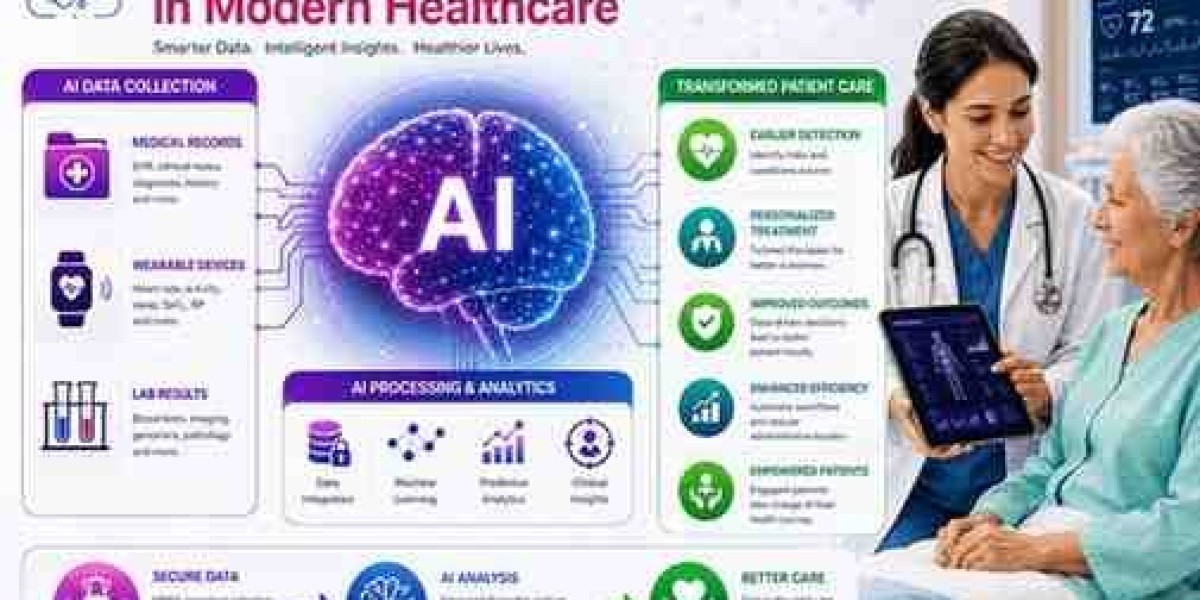
Artificial intelligence is transforming healthcare across the United States. From clinical research and patient monitoring to medical imaging and administrative automation, AI systems depend on high-quality data to deliver meaningful results. However, healthcare collecting data for AI introduces significant privacy, cybersecurity, and compliance challenges.
AI Data Collection for Healthcare requires more than gathering large datasets. Healthcare organizations must ensure that patient information is collected, stored, transferred, and processed securely while meeting applicable regulatory requirements. The HIPAA Security Rule requires covered entities and business associates to implement appropriate administrative, physical, and technical safeguards to protect electronic protected health information (ePHI).
Here are key security best practices healthcare organizations should consider when implementing AI-driven data collection.
Understand What Healthcare Data Your AI System Needs
The first step in secure AI data collection is understanding exactly what information the AI system requires.
Healthcare organizations may work with electronic health records, medical images, laboratory results, claims information, wearable-device data, patient surveys, and other sources. Not every AI project needs access to every available data point.
Following a data-minimization approach can reduce security exposure. The HIPAA Privacy Rule's minimum necessary standard generally calls for reasonable steps to limit uses and disclosures of protected health information to what is necessary for the intended purpose.
Before collecting data, define:
- Which data elements are required
- Why each data element is needed
- Where the data originates
- Who can access it
- How long should it be retained
- When and how it should be securely deleted
A clearly defined data strategy helps reduce unnecessary exposure while making AI projects easier to govern.
Protect Data With Encryption
Encryption should be a core component of AI Data Collection for Healthcare. Healthcare information can be vulnerable while stored in databases, transferred between systems, or processed across cloud environments.
Organizations should use strong encryption for data at rest and in transit, while protecting encryption keys separately and limiting access to authorized personnel. HHS guidance recognizes encryption as a method for rendering unsecured electronic PHI unusable, unreadable, or indecipherable to unauthorized individuals when implemented appropriately.
Encryption should be combined with other controls rather than treated as a complete security solution. Secure configurations, access controls, monitoring, vulnerability management, and incident-response procedures are also essential.
Implement Strong Access Controls
Not every employee, developer, vendor, or AI application should have unrestricted access to healthcare datasets.
Organizations should implement role-based access controls and follow the principle of least privilege. Multi-factor authentication can add another layer of protection for sensitive systems, while regular access reviews can help identify unnecessary permissions.
For AI environments, access controls should cover the entire data lifecycle—from collection and preprocessing to model development, testing, deployment, and storage.
Detailed audit logs can also help organizations determine who accessed information, what actions were performed, and when those activities occurred.
De-Identify Data Whenever Appropriate
De-identification can reduce privacy risks when identifiable patient information is not required for an AI use case.
For example, an AI research project may be able to use appropriately de-identified information instead of directly identifying patients. However, organizations should carefully evaluate whether data has actually been de-identified under applicable requirements and whether re-identification risks exist.
De-identification should be considered during the design stage rather than added after data has already been collected.
Secure Third-Party AI and Data Providers
Healthcare organizations frequently rely on cloud platforms, AI vendors, data processors, analytics providers, and other third parties. Each additional connection can introduce cybersecurity and privacy risks.
Before sharing healthcare data, organizations should evaluate a vendor's security practices, data-handling policies, access controls, breach-response procedures, retention policies, and contractual obligations.
When applicable, organizations should establish appropriate business associate agreements. HHS explains that business associates may handle PHI on behalf of covered entities under specific requirements, including appropriate agreements governing permitted uses and disclosures.
Vendor assessments should continue throughout the relationship rather than occurring only during onboarding.
Apply AI-Specific Risk Management
Traditional cybersecurity controls are important, but AI systems can introduce additional risks involving data quality, model behavior, privacy, transparency, and security.
The National Institute of Standards and Technology (NIST) AI Risk Management Framework provides a voluntary framework for organizations to manage AI risks and incorporate trustworthy characteristics such as security, privacy, accountability, transparency, and reliability throughout the AI lifecycle.
Healthcare organizations can use an AI risk-management process to evaluate data sources, document system objectives, test models, monitor performance, and reassess risks as systems evolve.
Monitor Data and AI Systems Continuously
Security does not end when an AI system goes live.
Healthcare organizations should continuously monitor data pipelines, APIs, databases, cloud environments, user activity, and AI applications for unusual behavior. Regular security assessments can identify vulnerabilities before attackers exploit them.
Organizations should also establish incident-response procedures that define how potential breaches, unauthorized access, data loss, or system compromise will be detected, contained, investigated, and addressed.
Continuous monitoring supports a proactive approach to healthcare data security and complements broader risk-management frameworks. NIST's Risk Management Framework emphasizes ongoing assessment and monitoring throughout the system lifecycle.
Build Security Into AI Data Collection From Day One
Successful AI Data Collection for Healthcare depends on trust. Healthcare providers, patients, researchers, and technology partners need confidence that sensitive information will be handled responsibly.
By minimizing unnecessary data collection, encrypting sensitive information, enforcing access controls, evaluating third-party vendors, using de-identification where appropriate, and continuously monitoring AI environments, organizations can reduce security and privacy risks.
For US healthcare organizations, security should be treated as a foundational part of AI strategy—not an afterthought. Combining HIPAA safeguards with structured AI risk-management practices can help organizations pursue AI innovation while protecting the confidentiality, integrity, and availability of healthcare information.