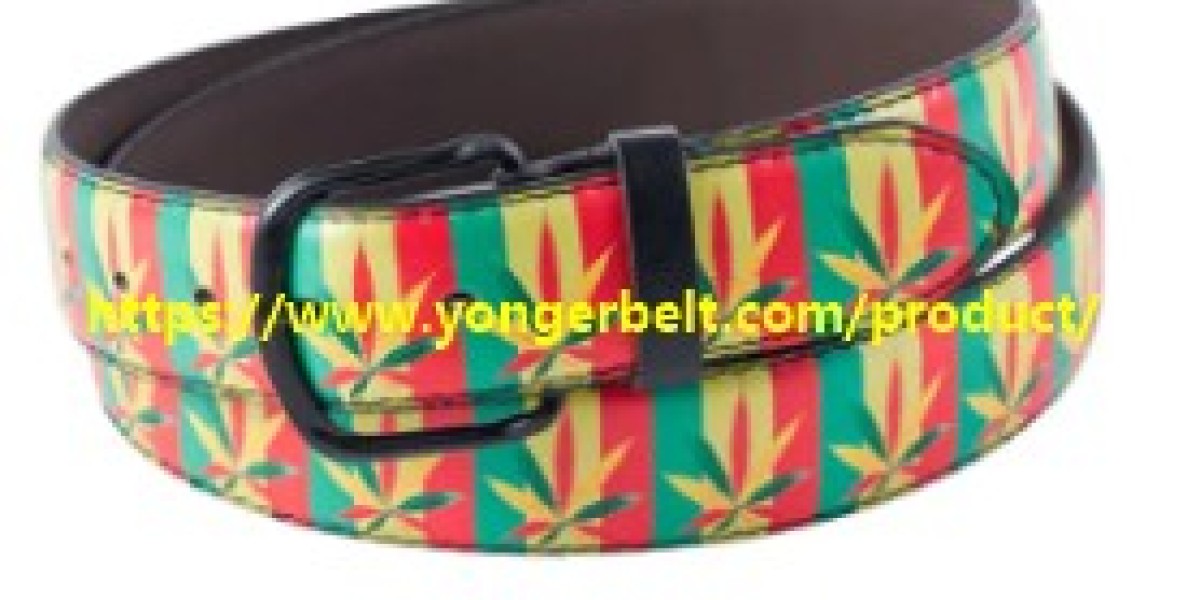
There is a faint bright scratch across the metal frame of the buckle on my old strap, right where it has dragged against the edge of a desk for years, and I only noticed it properly when I began comparing a Double Loop Buckle Belt with the plain single-prong kind I had always worn, because the paired keepers made me think about where the free tail of the strap ends up lying against my hip. Buying something like this comes down to a handful of physical measurements that a photograph flattens out, and I got several of mine wrong at first, so what follows is simply what turned out to matter once the thing was in my hands.
Width comes before anything else, and the number to trust is the one you read across the opening of the loops on your own trousers, not the figure on a listing, because a piece that is a few millimeters too broad will drag and bunch when you feed it through, while one that is a few millimeters too narrow will rattle sideways and let the buckle drift toward a hip. I laid a ruler across the gap inside my work trousers and then across my jeans, and the difference between them was larger than I had guessed, which is why I now keep a note on my phone with both readings.
Length is where people get caught, since the hole you want should land near the middle of the row and not at either end, which leaves room for a heavy winter coat on one side and a lighter summer waist on the other. I stand up, breathe out, fasten the prong through what I think is right, then sit on a hard chair and see whether it digs under the ribs, because a fit that feels fine in a shop mirror can pinch in a car seat. Spacing between the holes matters as well, because widely spaced ones force a choice between too snug and too loose, while closely set ones let you adjust by a hair, something I have always wished I had asked about before ordering.
The paired keepers deserve their own look, because their whole job is to hold the free tail flat along the band so it does not flap or poke out past a jacket, and that only works if the gap inside them suits the thickness of whatever passes through. I slide a folded tip into them while standing at a shelf and tug gently to see whether the end grips or slips, since a gap that is too snug will scuff the surface every time you thread it, whereas a slack one lets the end wander. Stitching around them is worth a squint under a lamp, looking for loose thread ends or crooked stitches, since that is the point that gets pulled hardest.
The sample that sat on my table through all of this came from Yonger, a company in Yiwu that develops and produces belts for fashion, lifestyle and everyday use, and I mention that only because it gave me something to hold against the readings on my phone instead of a flat picture, with the hardware visible and the stitching close enough to inspect. The company describes its approach as practical design with flexible product development, which I took to mean that sizes and details might be adjustable, though I did not ask and cannot say what the options are, and a buyer who needs a particular width or length would be wise to put that question in writing first.
Hardware is the part you touch all day, so I examine the frame and the pin the way I would examine a door hinge, turning the buckle over to see whether the rims are rounded or leave a sharp burr, and listening to the small click as the pin seats, which says something about how tight the fit is. A frame that is too large for the band will scrape a desk and leave a mark like the one on my old piece, while a very small one tilts sideways, and the weight of the metal is worth feeling because a heavy frame drags the front of a light waistband downward.
Thickness is the quiet measurement, and a piece that is too stiff will push back at the waist when you sit, whereas a thin one can curl at its rim after a few weeks, so I bend a sample sharply in my fingers and watch whether the surface cracks or whitens along the fold. I never found out what the surface was made of, and for something worn daily I would want that written down, along with how the cut sides are finished and what the metal is plated with, since those answers decide how it ages near rain, a backpack strap and the oils of a warm hand.
The Double Loop Buckle Belt is lying across the duvet beside a tape measure and the pair of trousers I wore yesterday, its tail tucked flat through the keepers. I have the page at https://www.yongerbelt.com open on my phone next to it, and the ruler still rests across the loop opening of my jeans.