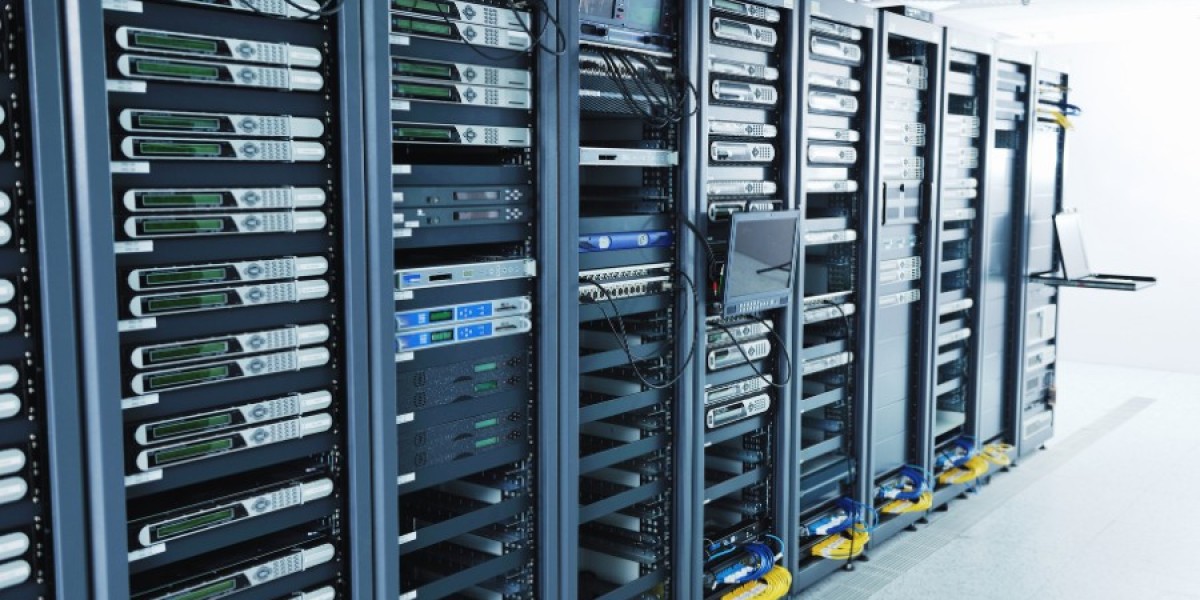
What is the storage area network market and why does it matter?
The storage area network (SAN) market covers the hardware, software, connectivity technologies, and services used to provide high-speed, centralized block storage to enterprise servers and applications. According to Expert Market Research, the global market was valued at USD 24.12 billion in 2025 and is projected to reach USD 36.05 billion by 2035, representing a 4.10% CAGR from 2026 to 2035.
A SAN is fundamentally different from ordinary network file storage because it presents storage resources to servers as block devices. This architecture is particularly valuable for databases, virtualization platforms, enterprise resource planning, transaction processing, and other workloads where predictable latency and continuous availability matter. IBM SANs describes centrally managed resources that can support high-speed transfers between systems and storage, including system-to-storage, system-to-system, and storage-to-storage operations.
The market remains relevant even as cloud computing, object storage, and hyperconverged infrastructure expands. Enterprises are not simply choosing between on-premises SAN and cloud storage; many are building hybrid environments in which performance-sensitive or regulated workloads remain on dedicated infrastructure while backup, disaster recovery, analytics, and archival processes extend into cloud environments.
The result is a SAN market increasingly defined by modernization rather than replacement. Flash storage, NVMe, automation, cyber-resilience, and higher-speed fabrics are extending the role of SANs into new generations of data-intensive computing.
Key Growth Drivers Shaping the SAN Market
Rising enterprise data volumes, AI and analytics workloads, virtualization, digital transformation, and the need for reliable disaster recovery are the primary forces sustaining SAN demand. Organizations need storage that can deliver consistent performance while scaling capacity without disrupting mission-critical applications.
The growth of AI is especially significant because storage has become a potential bottleneck between accelerated computing and enterprise data. AI training, inference, real-time analytics, and high-performance databases can generate intense parallel input/output requirements. Modern all-flash SAN architectures help address these requirements by combining high-capacity storage with low-latency connectivity.
Disaster recovery and business continuity are another important demand driver. Organizations are increasingly consolidating data in SAN environments to simplify replication and strengthen business continuity. Modern SAN architectures can support redundant fabrics, snapshots, replication, and geographically separated storage, making them valuable when downtime has direct financial or operational consequences.
Virtualization also continues to support the market. Instead of assigning dedicated storage to individual physical servers, enterprises can centralize storage resources and dynamically allocate capacity to virtual machines. This improves utilization and can simplify administration across large data centers.
At the same time, ransomware has changed the definition of enterprise storage protection. Storage infrastructure is increasingly expected to incorporate immutable snapshots, isolated recovery environments, secure replication, and monitoring rather than simply providing capacity. This creates additional demand for SAN software and professional services alongside physical infrastructure.
SAN Components and Technology Evolution
Hardware remains the foundation of the SAN market, but software and services are becoming increasingly important as organizations seek automation, observability, and easier lifecycle management. The market therefore spans storage arrays and switches as well as management software, integration, consulting, maintenance, and support.
Storage hardware includes arrays, Fiber Channel switches and directors, host bus adapters, cables, optical transceivers, controllers, and flash media. Modern systems increasingly use NVMe SSDs and all-flash architectures because these can deliver more predictable latency than traditional spinning-disk configurations. Dell, for example, markets Connectrix SAN directors and switches supporting Fiber Channel speeds up to 128 Gb/s and NVMe over Fabrics, illustrating the shift toward higher-bandwidth storage fabrics.
Software is gaining strategic importance because large SAN environments cannot be efficiently managed through manual configuration alone. Provisioning, capacity planning, health monitoring, performance analytics, policy enforcement, and automated failover are increasingly integrated into management platforms. IBM similarly highlights intelligent SAN management software for automated provisioning, health monitoring, and security.
Services complete the market. SAN implementation can involve fabric design, zoning, migration, interoperability testing, performance optimization, disaster-recovery planning, and ongoing maintenance. These services are particularly important for large enterprises where a poorly planned storage migration can affect thousands of applications and users.
By technology, Fiber Channel remains a major force because of its reliability, predictable performance, mature ecosystem, and established presence in mission-critical data centers. iSCSI remains attractive where organizations want SAN functionality over conventional Ethernet infrastructure. FCoE has a more specialized role, while InfiniBand is associated with high-performance computing and environments demanding very high bandwidth.
The next major evolution is NVMe over Fabrics (NVMe-oF). It extends the parallelism and low-latency characteristics of NVMe storage across a network. NVMe-oF can operate over Fiber Channel, Ethernet, and InfiniBand, giving enterprises several paths to modernize existing storage architectures.
Fiber Channel, High-Speed Fiber and NVMe Connectivity
Fiber Channel is evolving rather than disappearing, with high-speed optical connectivity and NVMe over Fiber Channel allowing established SAN environments to support substantially faster flash-based workloads. Single-mode and multimode optical fiber remain important physical media choices, while the networking protocol determines how storage traffic is transported.
In enterprise SANs, the term Fiber Channel refers primarily to a purpose-built storage networking protocol rather than simply the physical fiber cable. Optical fiber provides the transmission medium, with multimode fiber commonly used for shorter data-center links and single-mode fiber suited to longer distances. High-speed optics and transceivers allow SAN fabrics to scale bandwidth while maintaining the isolation and predictable behavior valued by enterprise storage teams.
The technology transition is particularly visible in Fiber Channel NVMe. The Fiber Channel Industry Association explains that NVMe over Fiber Channel can operate alongside traditional SCSI-based Fiber Channel, allowing organizations to modernize storage without necessarily replacing the entire SAN fabric at once.
This compatibility matters commercially. Enterprises with substantial investments in Fiber Channel switches, adapters, optical infrastructure, and operational expertise are unlikely to abandon those assets simply because newer protocols exist. Instead, many can upgrade arrays and introduce NVMe workloads while preserving parts of the existing fabric.
iSCSI provides a different value proposition. Because it operates over IP networks, organizations can often leverage existing Ethernet skills and infrastructure. This makes it particularly relevant to smaller deployments and organizations where the performance requirements do not justify a dedicated Fiber Channel fabric. NVMe/TCP is extending this Ethernet-based model into higher-performance environments.
The broader trend is therefore convergence around performance, flexibility, and lower operational complexity rather than a single technology replacing every other protocol.
Industry Applications and Enterprise Use Cases
BFSI, IT and telecommunications, healthcare, manufacturing, retail, government, aerospace and defense, energy, and education all use SAN infrastructure where data availability, performance, and centralized management are business-critical.
Financial institutions are among the strongest SAN users because banking applications combine high transaction volumes with stringent availability, security, and data-retention requirements. SANs support databases, trading platforms, payment systems, analytics environments, and recovery infrastructure where unpredictable storage performance can affect customer-facing services.
Healthcare organizations have a different but equally demanding requirement. Medical imaging, electronic health records, genomics, research data, and diagnostic applications generate large volumes of information that must remain accessible and protected. High-performance storage can help hospitals and research institutions process imaging and analytical workloads without making data availability dependent on individual servers.
Manufacturing and automotive companies increasingly use SAN environments alongside industrial analytics and digital-twin systems. Automotive engineering can generate enormous simulation datasets, while factories increasingly use machine vision and real-time analytics. Storage infrastructure must therefore support both centralized enterprise applications and data-intensive engineering workloads.
Aerospace and defense organizations place particular emphasis on reliability, security, and controlled data environments. Simulation, telemetry, engineering databases, intelligence systems, and mission applications can require high-performance storage while also operating under strict governance and security requirements.
Retail and e-commerce companies use SAN infrastructure behind transaction systems, inventory applications, customer analytics, and recommendation engines. During peak periods, storage performance becomes directly connected to customer experience and revenue.
Energy and utilities organizations similarly depend on centralized storage for operational technology, geospatial information, engineering applications, and large analytical datasets. Meanwhile, government and education institutions increasingly need scalable storage to support digital services, research, citizen applications, and data-intensive workloads.
Regional Market Trends and Growth Opportunities
North America remains a leading SAN market because of its mature enterprise IT infrastructure, large installed base of Fiber Channel systems, data-center investment, and concentration of technology vendors. Asia-Pacific, however, is emerging as one of the strongest growth regions as cloud adoption, digital transformation, fintech, telecommunications, and data-center construction accelerate.
Market estimates vary because research firms use different definitions and segmentation methods, but the regional direction is consistent. Mordor Intelligence estimates North America accounted for 39.84% of the storage area network solutions market in 2024, while Asia-Pacific is projected to grow at 6.12% annually through 2030.
In the United States and Canada, demand is supported by enterprise refresh cycles, cloud infrastructure, financial services, healthcare, and large-scale data-center deployments. Organizations with mature SAN estates are increasingly upgrading toward all-flash arrays, higher-speed Fiber Channel, and NVMe-based architectures rather than starting from scratch.
Europe is characterized by strong requirements around data governance, cybersecurity, energy efficiency, and digital sovereignty. These priorities encourage investments in infrastructure that can provide predictable control over sensitive enterprise data while integrating with hybrid-cloud architectures.
Asia-Pacific has a different growth profile. China, India, Japan, South Korea, and Southeast Asian markets are expanding data-center capacity while enterprises modernize legacy infrastructure. Research on the Indian market, for example, identifies growing interest in NVMe over Fabrics as businesses seek faster data access and lower network bottlenecks.
Latin America and the Middle East and Africa offer longer-term opportunities as cloud adoption, telecommunications infrastructure, financial digitization, and local data-center capacity expansion. Growth in these regions is likely to be more uneven, with investment concentrated in major commercial and technology hubs.
Competitive Landscape and Leading Companies
The competitive landscape includes major infrastructure vendors that combine storage arrays, SAN switches, networking, management software, and professional services. The companies identified in the supplied market segmentation include HP Inc., Dell Technologies, IBM, Oracle, Cisco Systems, and NEC, alongside other storage and networking specialists.
Dell Technologies competes across enterprise storage and SAN networking, with its portfolio spanning Connectrix Fiber Channel infrastructure and storage platforms designed for virtualized and mission-critical workloads.
IBM maintains a significant position in enterprise SAN connectivity through its b-type and c-type Fiber Channel switches, alongside software and services designed around high availability, security, and scalable storage networks.
Hewlett Packard Enterprise offers SAN implementation services covering Fiber Channel, FCoE, FCIP, FICON, iSCSI, and associated switching technologies, demonstrating how services and integration have become part of the competitive proposition.
Cisco Systems remains important in SAN networking, particularly through Fiber Channel switching and broader data-center networking capabilities. Cisco also supports NVMe over Fabrics architectures, reflecting the industry's movement toward higher-performance storage connectivity.
Competition is increasingly shifting from simply selling storage capacity toward delivering complete infrastructure outcomes. Vendors differentiate through latency, availability, cybersecurity, automation, interoperability, AI-readiness, energy efficiency, subscription models, and the ability to integrate SAN environments with hybrid and multicloud architectures.
Market Challenges and Technology Constraints
The biggest challenges are high infrastructure and operational costs, SAN complexity, skilled-labor requirements, technology transitions, and competition from cloud, hyperconverged, software-defined, and alternative storage architectures.
Traditional SAN environments can require specialized switches, adapters, optical infrastructure, and experienced administrators. For smaller organizations, an Ethernet-based iSCSI or NVMe/TCP architecture can sometimes offer a simpler route to centralized block storage. The growing availability of cloud-managed and software-defined storage also gives buyers more choices than they had a decade ago.
Another challenge is technological fragmentation. Organizations must evaluate Fiber Channel generations, NVMe-oF transports, Ethernet speeds, array compatibility, operating-system support, multipathing, and management tools. A theoretically faster technology does not automatically deliver better business value if it introduces interoperability problems or requires extensive infrastructure replacement.
Cost is also important. Although all-flash systems can improve performance and operational efficiency, enterprise storage remains a significant capital investment. High-speed optics, controllers, SSDs, switches, and support contracts can increase total cost of ownership. Organizations therefore increasingly evaluate storage purchases on workload economics rather than raw capacity.
Even so, these challenges are creating opportunities for vendors that simplify deployment. Automation, predictive monitoring, consumption-based purchasing, managed services, and integrated cyber-resilience capabilities can reduce the expertise required to operate increasingly sophisticated SAN environments.
Future Outlook for the Storage Area Network Market
The SAN market is likely to remain a core part of enterprise infrastructure through the next decade, but its definition will continue to broaden around NVMe, automation, Ethernet, AI workloads, cyber-resilience, and hybrid-cloud integration. Expert Market Research forecasts the global market to rise from USD 24.12 billion in 2025 to USD 36.05 billion by 2035 at a 4.10% CAGR.
The most important change is that future SAN environments will be judged less by the amount of storage they provide and more by how effectively they move data to compute. AI and analytics make latency, throughput, parallelism, and predictable performance increasingly important. NVMe-oF is consequently becoming a central modernization path, while Fiber Channel continues to evolve rather than simply disappear.
The market is also becoming more software-driven. Automated provisioning, predictive performance management, policy-based security, intelligent capacity planning, and integration with orchestration platforms can turn SAN infrastructure from a manually managed hardware layer into a programmable resource.
Cyber-resilience will remain another major priority. As ransomware and operational disruption become more expensive, enterprises are likely to invest further in isolated recovery environments, immutable copies, secure replication, and monitoring integrated directly into storage platforms.
Overall, the storage area network market is not a story of legacy technology surviving unchanged. It is a story of enterprise storage networking adapting to a world in which data is increasingly the limiting factor in AI, digital commerce, industrial automation, scientific research, and mission-critical computing.
Conclusion:
The storage area network market is entering a modernization phase rather than a decline. Its projected expansion from USD 24.12 billion in 2025 to USD 36.05 billion by 2035 reflects continuing demand for reliable, scalable, low-latency storage infrastructure.
Fiber Channel remains an important foundation, but NVMe over Fabrics, all-flash arrays, intelligent management, Ethernet-based storage, and cyber-resilience are reshaping the technology landscape. At the same time, demand is spreading across AI infrastructure, healthcare, automotive and manufacturing, financial services, telecommunications, aerospace, government, and other data-intensive industries.
For buyers, the central question is no longer simply whether to deploy a SAN. It is how to build a storage architecture that balances performance, resilience, security, scalability, and total cost of ownership. Vendors that can deliver that balance—and integrate traditional SAN capabilities with emerging AI and hybrid-cloud requirements—are best positioned to capture the next phase of market growth.