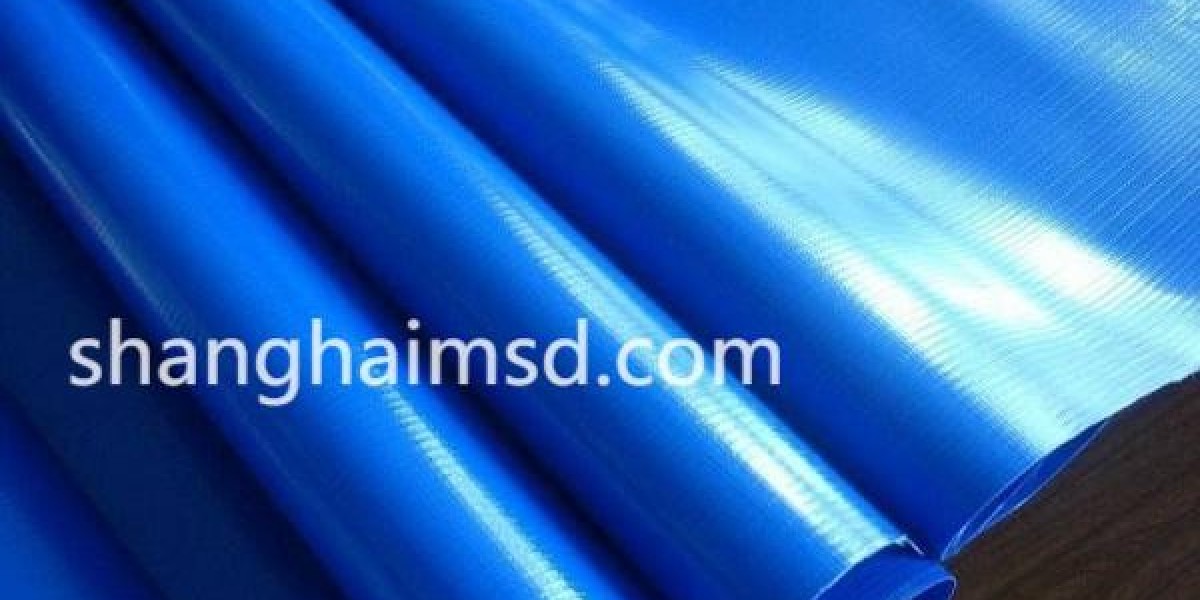
Inflatable structures require specialized textile materials capable of maintaining strength, flexibility, and airtight performance under continuous pressure. In the development of coated technical textiles, PVC Inflatable Fabric has emerged as an essential material used in recreational products, architectural structures, and emergency equipment. With its reinforced textile base and durable polymer coating, this composite material offers a reliable balance of mechanical performance and environmental resistance. Companies such as Shanghai MSD International Trade Co., Ltd have contributed to advancing this material through improved coating technologies and strict quality control processes.
The composition of inflatable composite textiles typically involves a high-strength polyester base fabric combined with a polyvinyl chloride coating. The woven polyester layer acts as the structural framework of the material, providing high tensile strength and dimensional stability. Polyester fibers are widely used in industrial textiles because they can resist stretching and deformation when subjected to continuous pressure. The PVC coating applied to the surface forms a protective barrier that ensures air retention while protecting the textile from water, chemicals, and environmental exposure.
Manufacturing coated inflatable textiles involves several critical processing stages. The production process begins with the preparation of the polyester reinforcement fabric. This base fabric must meet strict requirements regarding weaving density, tensile strength, and uniformity. Once prepared, the textile enters the coating stage where liquid PVC formulations are applied to the fabric surface using specialized equipment such as knife-over-roll coating systems or calendaring machines.
During coating, the polymer mixture spreads evenly across the fabric surface, filling microscopic gaps between fibers and creating a continuous protective layer. Thickness control is extremely important during this stage because it determines the flexibility, durability, and airtightness of the final material. After coating, the fabric passes through heating chambers where the PVC layer undergoes curing and bonding. Controlled heating ensures strong adhesion between the polymer layer and the textile reinforcement.
Mechanical durability is one of the most important characteristics of inflatable coated textiles. Inflatable structures often experience repeated pressure changes and mechanical stress during use. The reinforced fabric base distributes this stress across the material surface, preventing localized damage. High tensile strength ensures that the material can maintain its structural integrity even under significant internal pressure.
Tear resistance is another essential property. In inflatable products such as boats, floating structures, and recreational equipment, localized damage can spread quickly if the material does not resist tearing. Reinforced polyester fibers provide resistance against tear propagation, allowing the material to maintain stability even if minor surface damage occurs.
Air retention performance plays a crucial role in the effectiveness of inflatable materials. The PVC coating acts as an impermeable barrier that prevents air from escaping through the textile structure. Maintaining consistent internal pressure is necessary for inflatable structures to retain their shape and functionality. High-quality coatings help minimize gas permeability while maintaining flexibility for folding and transportation.
Environmental resistance is equally important because many inflatable products are used outdoors. Continuous exposure to ultraviolet radiation, humidity, and temperature fluctuations can degrade some materials over time. To address these challenges, PVC coating formulations often include stabilizers and anti-aging additives that improve resistance to UV radiation and weathering. These additives help maintain material flexibility and color stability even after prolonged outdoor use.
Fabrication techniques also contribute to the performance of inflatable materials. Inflatable structures are typically assembled by joining multiple panels together using welding or bonding processes. High-frequency welding and hot-air welding are commonly used methods that create strong, airtight seams. These welding processes melt the polymer coating at the seam interface, forming a bond that is often as strong as the surrounding material.
Quality assurance testing is critical to ensure reliable performance in practical applications. Mechanical tests are conducted to measure tensile strength, tear resistance, and elongation properties. These tests help engineers understand how the material behaves when exposed to pressure and mechanical stress.
Airtightness testing is another important evaluation method. Samples are inflated under controlled conditions to measure pressure retention over time. This test ensures that the coated textile can maintain stable internal pressure during long-term use. Seam strength testing is also performed to verify that welded joints remain durable when subjected to repeated pressure cycles.
Abrasion resistance testing evaluates how well the polymer coating withstands friction and surface contact. This property is particularly important for inflatable boats, water sports equipment, and outdoor structures that may experience repeated contact with rough surfaces. Environmental simulation tests may also be conducted to assess resistance to UV exposure and temperature variations.
Applications for inflatable coated textiles span several industries. Recreational uses include inflatable boats, paddle boards, floating docks, and water park installations. These products rely on durable coated fabrics to maintain shape and buoyancy during extended use in water environments.
In the advertising and entertainment sectors, inflatable materials are used for large promotional structures such as event decorations, inflatable arches, and giant display balloons. The ability to print graphics on the coated surface makes the material highly suitable for marketing and branding purposes.
Industrial applications are also expanding. Air-supported buildings, temporary emergency shelters, and protective air cushions used in transportation or logistics often rely on inflatable coated textiles. These structures benefit from materials that are lightweight yet capable of maintaining internal pressure over large surface areas.
Manufacturers continue to improve inflatable textile technology by developing stronger base fabrics and more durable polymer coatings. Shanghai MSD International Trade Co., Ltd invests in advanced coating equipment and production techniques to improve material consistency, durability, and environmental resistance for inflatable applications.
Professionals seeking additional insights into inflatable coated textiles and their industrial uses can explore further technical information provided by Shanghai MSD International Trade Co., Ltd through the following resource:
https://www.shanghaimsd.com/news/what-is-pvc-inflatable-fabric-everything-you-need-to-know.html .