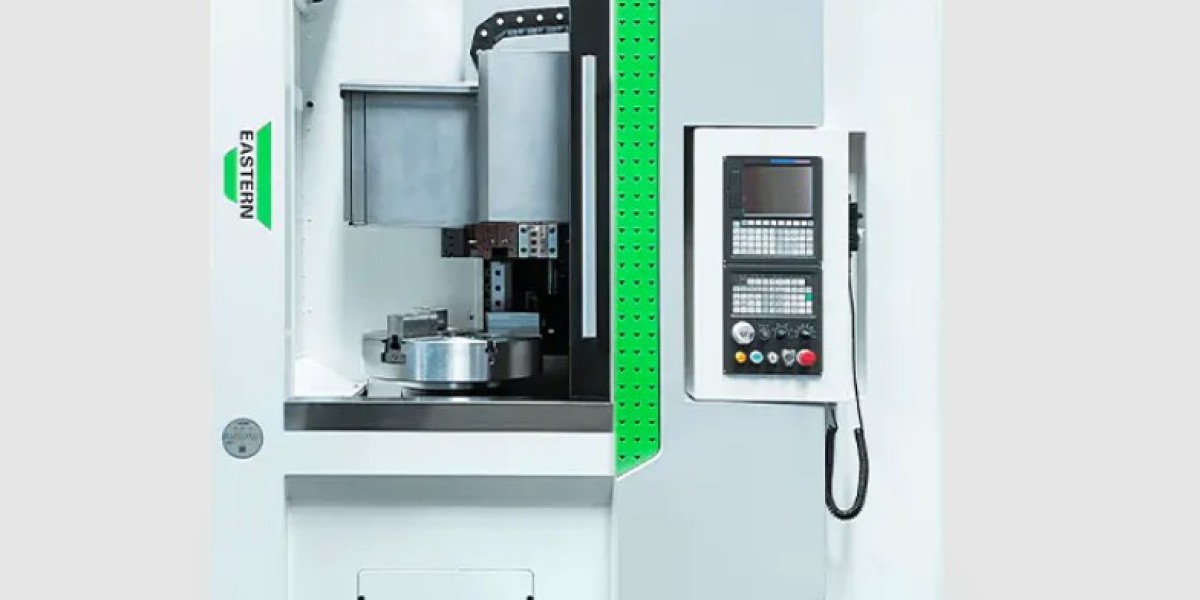
Not every shop needs the added capability of a Y-axis dual spindle lathe, but for certain part families, it becomes close to a default requirement rather than an upgrade. Fittings with cross-drilled holes, shafts with flats machined at specific angles, and connector bodies with features on both ends are common candidates for this type of machine.
Automotive component suppliers often turn to this configuration for parts like sensor housings, valve bodies, and small shafts that require milled features alongside standard turned diameters. Producing these on a conventional lathe would mean multiple setups across different machines, each introducing its own tolerance stack-up. A Y-axis dual spindle lathe consolidates that into fewer operations, which tends to improve dimensional consistency across a batch.
Hydraulic and pneumatic fitting manufacturers see similar advantages. Many fittings require cross-holes or flats positioned precisely relative to a threaded feature, and getting that relationship right without a Y-axis typically means indexing the part manually between operations — a slower, more error-prone process for high-volume runs.
Connector and coupling producers also lean on dual spindle setups since these parts frequently need machining on both ends: one side turned to a specific profile, the other drilled or tapped. The sub-spindle handles the second operation without the part leaving the machine, which shortens cycle time meaningfully compared to running two separate setups.
Buyers evaluating suppliers for these part categories often ask about programmable axis count and whether the control system supports simultaneous operations on both spindles, since that capability directly affects cycle time on complex parts. A Y-axis dual spindle lathe that can run both spindles concurrently, rather than sequentially, offers real throughput advantages for shops producing at volume.