
The Quantum Cryptography Market is gaining strategic importance as governments, financial institutions, technology companies, and critical infrastructure operators prepare for the cybersecurity challenges associated with quantum computing. As conventional encryption methods face potential long-term vulnerabilities, organizations are exploring advanced cryptographic technologies that can protect sensitive information against increasingly sophisticated cyber threats.
According to Dimension Market Research, the global Quantum Cryptography Market is projected to reach USD 1.7 billion in 2025 and grow to USD 30.5 billion by 2034 , registering a compound annual growth rate (CAGR) of 38.1% . This expansion reflects growing demand for secure communication infrastructure, quantum-resistant data protection, and advanced encryption technologies.
The transition toward quantum-safe cybersecurity is becoming particularly important for industries managing sensitive information. Banking networks, government communications, healthcare databases, defense infrastructure, and cloud platforms all require reliable methods of protecting information over extended periods. Quantum cryptography is emerging as one of the technologies being explored to address these requirements.
What Is the Quantum Cryptography Market?
The Quantum Cryptography Market covers technologies, hardware, software, and services that use principles of quantum mechanics to secure information and communications.
Unlike conventional cryptography, which generally depends on mathematical problems that are difficult for traditional computers to solve, quantum cryptography uses the physical properties of quantum particles to support secure communication.
One of its most important applications is Quantum Key Distribution (QKD). This technology enables two parties to establish shared encryption keys using quantum communication channels. An important characteristic of QKD is that attempts to observe or intercept quantum states can introduce detectable changes, helping communication participants identify potential eavesdropping.
The market also includes supporting hardware, software platforms, network infrastructure, and professional services required to implement quantum-secure communication systems.
It is important to distinguish quantum cryptography from Post-Quantum Cryptography (PQC). Quantum cryptography uses quantum mechanical principles, whereas PQC develops mathematical encryption algorithms designed to resist attacks from both classical and quantum computers. Both approaches contribute to the wider development of quantum-safe cybersecurity.
Why Is the Quantum Cryptography Market Growing?
Increasing Cybersecurity Threats and Quantum Computing Risks
The development of quantum computing is creating a significant challenge for conventional encryption infrastructure. Widely used public-key cryptographic methods, including RSA and elliptic-curve cryptography, could become vulnerable to sufficiently powerful fault-tolerant quantum computers.
This possibility is encouraging organizations to assess their existing encryption systems and invest in future-ready security technologies.
Another concern is the harvest-now, decrypt-later approach, in which attackers collect encrypted information today with the possibility of decrypting it when more powerful quantum computing capabilities become available. This risk is particularly important for sensitive information that must remain confidential for many years.
Quantum cryptography offers an alternative approach to protecting communication channels, particularly where high-security applications justify specialized infrastructure.
Growing Demand for Secure Communications
The expansion of digital banking, cloud computing, telecommunications, and interconnected infrastructure is increasing the volume of sensitive information transmitted across networks.
Government and defense organizations require secure communication channels for classified information and national security operations. Financial institutions need to protect transaction infrastructure and confidential customer information. Healthcare providers also require strong safeguards for sensitive medical records.
These requirements are creating opportunities for quantum cryptography providers to develop specialized communication systems for high-security applications.
Government Investment and Quantum Research
Government-backed quantum research programs and public-private partnerships are supporting the development of quantum communication infrastructure.
China's quantum experiments satellite and long-distance quantum communication network demonstrate the scale of investment taking place in this field. Europe and North America are also advancing research and development initiatives focused on secure quantum networks and critical infrastructure protection.
These investments are helping move quantum cryptography beyond laboratory research toward practical commercial and institutional applications.
Get a Free Sample of the Quantum Cryptography Market Report
Explore detailed market forecasts, technology developments, component analysis, application opportunities, and competitive intelligence through the Dimension Market Research report.
https://dimensionmarketresearch.com/request-sample/quantum-cryptography-market/
Key Market Drivers and Technology Trends
Quantum Key Distribution and Secure Network Infrastructure
Quantum Key Distribution remains one of the most important technologies within the quantum cryptography ecosystem.
QKD uses quantum communication channels, including fiber-optic infrastructure and free-space optical links, to distribute encryption keys. Its ability to reveal certain interception attempts makes it particularly relevant for sensitive communication networks.
Growing interest in secure connections between government facilities, financial institutions, and data centers is supporting the development of QKD infrastructure.
Hybrid Quantum and Classical Encryption
One emerging trend is the use of hybrid security architectures that combine conventional encryption with quantum-based technologies.
Organizations may need to maintain compatibility with existing IT infrastructure while gradually adopting new security systems. Hybrid approaches can help support this transition without requiring an immediate replacement of established communication networks.
The development of smaller, more affordable quantum devices and improved integration capabilities is also important for wider commercialization.
Advances in Quantum Communication Networks
Research into quantum networks, satellite communication, and long-distance quantum transmission is expanding the potential applications of quantum cryptography.
Fiber-based networks are particularly relevant for metropolitan and regional communication infrastructure, while satellite-based approaches may help connect geographically separated locations.
These developments could expand the use of quantum-secure communication beyond specialized research environments.
Quantum Cryptography Market Segmentation
The Dimension Market Research report examines the market across component, technology, application, and industry vertical categories.
By component , the market includes hardware, software, and services. Hardware is anticipated to hold the majority market share in 2025. This reflects the importance of specialized quantum communication equipment, photon detectors, optical components, and supporting transmission infrastructure.
Software supports encryption management, communication protocols, network monitoring, and system integration. Services contribute through implementation, consulting, maintenance, and technical support.
By application , secure communications is expected to account for the largest revenue share in 2025. This reflects the importance of protecting sensitive information transmitted across government, financial, telecommunications, and enterprise networks.
By technology , quantum cryptography solutions include technologies associated with quantum key distribution and other quantum-based security approaches.
By industry vertical , relevant applications extend across banking and financial services, government and defense, healthcare, telecommunications, and other sectors requiring advanced information security.
Regional Outlook: North America Leads Market Development
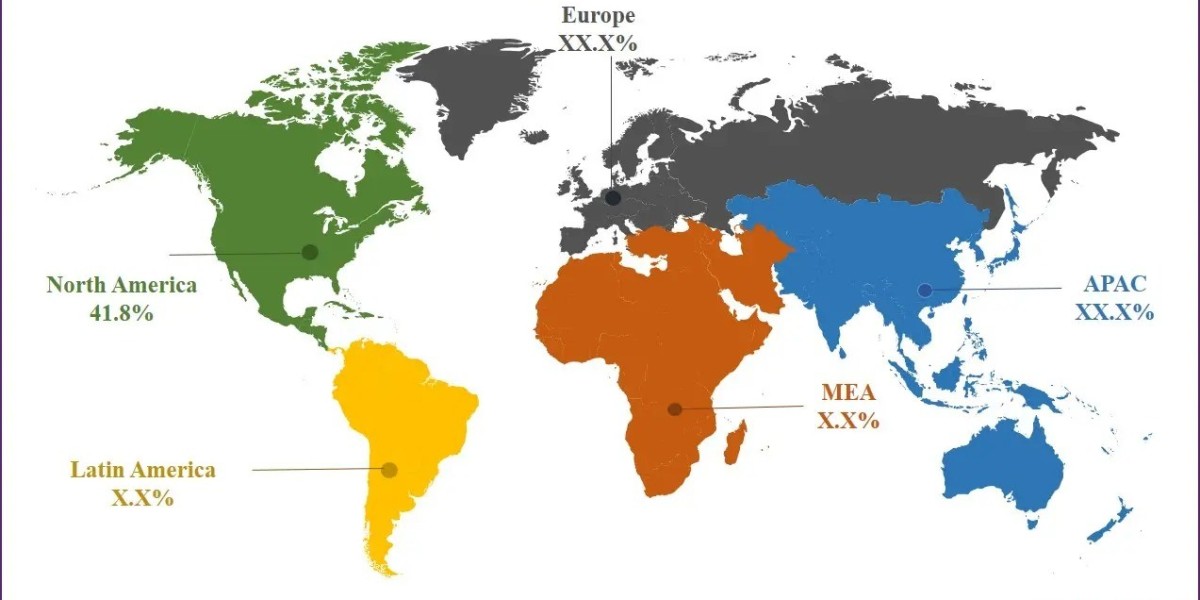
North America is expected to account for 41.8% of global Quantum Cryptography Market revenue in 2025 , making it the leading regional market.
The region benefits from government investment, advanced technology research, and collaboration between universities, national laboratories, and private-sector technology companies. The United States is particularly important because of its established cybersecurity ecosystem and investment in quantum research.
The US Quantum Cryptography Market is projected to reach USD 600 million in 2025, with a forecast CAGR of 35.7% over its forecast period.
Europe is another important market, supported by cross-border quantum communication research, public investment, and digital security initiatives. The European Quantum Cryptography Market is projected to reach USD 425.0 million in 2025, with a CAGR of 36.9%.
Japan is also advancing quantum communication infrastructure through research partnerships, fiber-based test networks, and satellite-to-ground communication experiments. Its Quantum Cryptography Market is projected to reach USD 107.1 million in 2025, with a CAGR of 40.1%.
Growth Opportunities and Market Challenges
The growing need for long-term information security creates opportunities for quantum cryptography developers and infrastructure providers.
Financial institutions, defense organizations, government agencies, and critical infrastructure operators represent important potential customers. Telecom operators and data center companies may also explore quantum-secure communication networks as part of their long-term cybersecurity strategies.
However, commercial adoption faces several challenges.
Specialized hardware, photon detectors, and optical fiber infrastructure can increase implementation costs. Long-distance quantum transmission also requires suitable technical infrastructure and reliable operating environments.
Scalability and integration with conventional communication systems remain important considerations. Organizations must evaluate the cost, performance, and practical requirements of deploying quantum cryptography alongside their existing cybersecurity architecture.
The development of more affordable hardware, improved transmission technologies, and hybrid security systems will therefore be important to the market's long-term expansion.
Competitive Landscape of the Quantum Cryptography Market
Competition in the Quantum Cryptography Market involves technology developers, quantum communication specialists, cybersecurity providers, and established technology companies.
The competitive environment is shaped by research investment, hardware development, QKD capabilities, secure network infrastructure, and partnerships with government agencies and telecommunications providers.
Companies operating in the broader quantum security ecosystem are working to improve communication performance, reduce implementation complexity, and expand the commercial viability of quantum technologies. Product integration, technical reliability, scalability, and the ability to support high-security applications will remain important competitive factors.
Quantum Cryptography Market Statistics
Market indicator | Verified value |
2025 Market Size | USD 1.7 Billion |
2034 Forecast | USD 30.5 Billion |
Forecast CAGR | 38.1% |
Leading Region | North America |
North America Revenue Share | 41.8% |
Leading Component | Hardware |
Leading Application | Secure Communications |
Future Outlook for the Quantum Cryptography Market
The future of the Quantum Cryptography Market will be shaped by the convergence of quantum computing, cybersecurity, and advanced communication infrastructure.
As organizations prepare for potential quantum-enabled attacks on conventional encryption, demand for stronger information protection is expected to increase. Quantum Key Distribution, hybrid encryption architectures, and emerging quantum communication networks will remain important areas of development.
Although infrastructure costs and scalability challenges may influence adoption, continued research and commercialization could expand quantum cryptography into more industries and applications.
The market's growth reflects a broader transformation in cybersecurity: organizations are increasingly looking beyond present-day threats and preparing their digital infrastructure for the security challenges of the quantum computing era.
Explore the Complete Quantum Cryptography Market Analysis
Access the complete Dimension Market Research report for detailed market forecasts, segmentation insights, regional analysis, competitive intelligence, and strategic opportunities through 2034.
https://dimensionmarketresearch.com/checkout/quantum-cryptography-market/
Frequently Asked Questions (FAQs)
- What is the global Quantum Cryptography Market size?
The global Quantum Cryptography Market is projected to reach USD 1.7 billion in 2025 and USD 30.5 billion by 2034.
- What is the CAGR of the Quantum Cryptography Market?
The market is expected to grow at a CAGR of 38.1% during the forecast period from 2025 to 2034.
- Which component leads the Quantum Cryptography Market?
Hardware is anticipated to hold the majority share of the Quantum Cryptography Market in 2025.
- Which region leads the Quantum Cryptography Market?
North America is expected to lead the global market with a 41.8% revenue share in 2025.
- What is the future outlook for the Quantum Cryptography Market?
The market is expected to experience substantial growth through 2034, supported by quantum computing advancements, increasing cybersecurity requirements, and demand for secure communication infrastructure.
Conclusion
The Quantum Cryptography Market is becoming an important part of the global transition toward quantum-safe cybersecurity. Rising cyber threats, concerns about conventional encryption vulnerabilities, and growing investment in quantum communication infrastructure are creating new opportunities for technology providers.
Hardware, secure communications, and North American market leadership are important features of the current industry outlook. Meanwhile, QKD networks, hybrid encryption, and advances in quantum transmission technologies are expected to influence future development.
As governments and enterprises prepare for the quantum computing era, quantum cryptography is positioned to play an increasingly important role in protecting sensitive information and strengthening digital trust.
Related Quantum Security Market Insights
1. Post-Quantum Cryptography (PQC) Market Size
Post-Quantum Cryptography (PQC) Market Size
The global Post-Quantum Cryptography (PQC) Market is projected to reach USD 1,135.0 million in 2025 and USD 21,272.4 million by 2034, registering a CAGR of 38.5%. Growing demand for quantum-resistant encryption, regulatory compliance, and secure cloud infrastructure is supporting market expansion.
2. Quantum Key Distribution Market Share
Quantum Key Distribution Market Share
The global Quantum Key Distribution Market is estimated at USD 826.2 million in 2026 and is projected to reach USD 12,378.5 million by 2035, growing at a CAGR of 35.1%. Hardware is expected to lead the component segment, while fiber-based QKD is projected to lead deployment.
3. Quantum Computing Market Growth
Quantum Computing Market Growth
Quantum computing is an important technology area connected to the development of quantum cryptography and next-generation cybersecurity. The supplied Dimension Market Research URL was not accessible during verification, so market size, CAGR, and forecast figures have been omitted rather than estimated.


