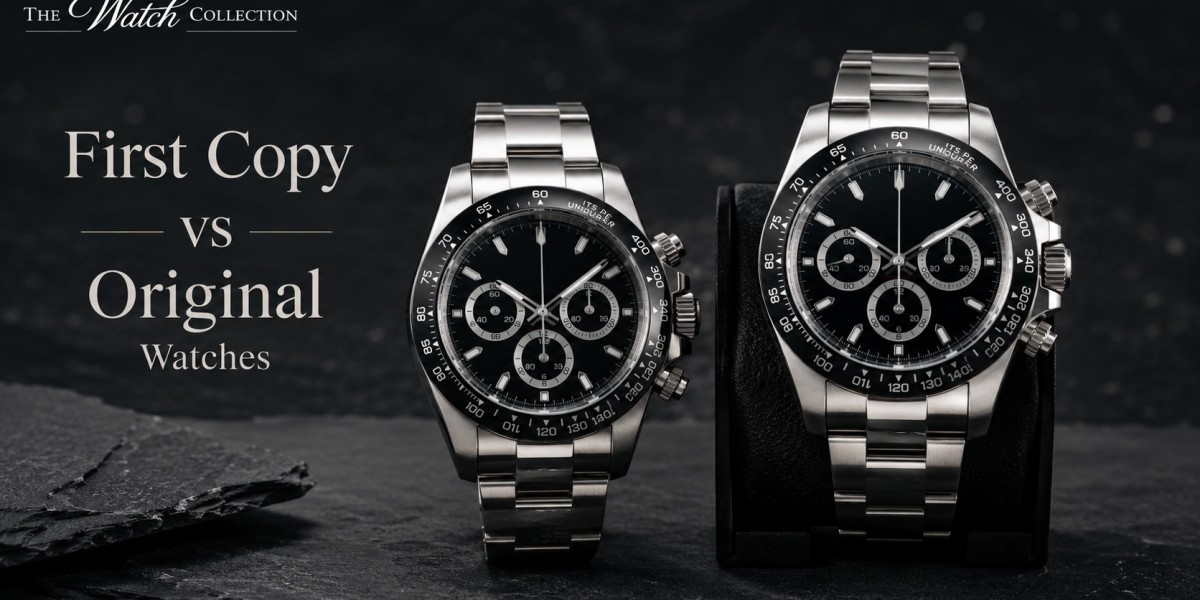
The online market for first copy watches in India has grown rapidly, and with that growth has come a predictable rise in unreliable sellers looking to take advantage of buyers who don't know what to check before paying. Getting cheated in this category rarely means outright fraud — more often, it means paying premium-grade prices for a standard-grade watch, or receiving a product that looks nothing like its listing photos.
This guide covers the specific red flags, verification steps, and buyer habits that separate a safe purchase from a disappointing one.
Understanding How Buyers Actually Get Cheated
Most negative experiences in this category fall into a few repeating patterns. A seller advertises a watch as "7A quality" or "premium grade" when it is actually a basic standard grade piece, relying on the buyer not knowing the difference. Listing photos are sometimes taken from a different, better-finished batch than what is actually shipped. Sellers occasionally disappear or stop responding once payment is made, particularly common with social media-only sellers operating without a proper website.
None of these patterns require sophisticated detection to avoid — they simply require knowing what to ask and what to look for before paying.
Red Flag 1: Vague or Missing Grade Information
The clearest warning sign in this market is a listing that does not specify a quality grade at all. Terms like "premium quality" or "branded look" without further detail are almost always a sign that the seller either does not know the actual grade or is deliberately avoiding the conversation.
A trustworthy seller states clearly whether a piece is standard, AAA, or 7A quality, since this detail affects price, materials, and movement type more than any other factor.
Red Flag 2: Stock Photography Instead of Real Product Images
Generic, polished catalog images pulled from elsewhere online are common among less reliable sellers, particularly those operating purely through social media or messaging apps. A simple test before buying: ask for a photo of the exact watch with today's date written on paper next to it. Sellers confident in their stock provide this without hesitation; sellers relying on borrowed images tend to delay or deflect.
Red Flag 3: No Return or Exchange Policy
A return policy is one of the clearest signals of seller accountability. If a seller offers no return window at all, they are effectively asking the buyer to absorb all the risk of a purchase they cannot inspect beforehand. This does not mean every legitimate seller offers unlimited returns — many reasonably restrict returns to damage, wrong item, or missing parts — but a seller offering no policy at all is a genuine warning sign.
Red Flag 4: Prices That Don't Match the Claimed Grade
Pricing follows a fairly consistent logic in this market. A genuine 7A quality automatic watch costs more to produce than a basic standard grade quartz piece, and that cost difference shows up in retail pricing. When a listing claims premium grade at a price that matches what a standard grade piece should cost, the grading claim is very likely inflated. A ₹1,200 "7A quality automatic" watch should raise immediate questions.
Red Flag 5: No Verifiable Business Presence
Sellers operating purely through a personal social media account, with no website and no customer service channel beyond direct messages, carry significantly more risk than established online retailers. A seller with a proper website, listed contact details, and a documented policy page offers far more accountability than one operating entirely through a chat thread.
A Practical Checklist Before Paying
A short checklist resolves most quality uncertainty before any money changes hands:
- Ask for the specific quality grade directly — standard, AAA, or 7A.
- Request a current photo or short video of the current unit being sold.
- Check for a stated return or exchange policy and read the current conditions.
- Compare price against the claimed grade using rough benchmarks — standard ₹500–₹2,500, AAA ₹2,500–₹6,000, 7A ₹6,000 and above.
- Look for a proper website rather than relying solely on a social media payment link.
This applies whether shopping for first copy watches for men or first copy watches for women — the verification steps stay the same regardless of style or brand preference.
What to Do If Something Goes Wrong After Payment
If a purchase doesn't match what was promised, document the issue immediately with photos and, ideally, an unboxing video showing the discrepancy. Many sellers with genuine return policies require this kind of proof within a short window after delivery, often 48 hours, so acting quickly matters.
If a seller becomes unresponsive, the payment method used can matter. Payments made through platforms with buyer protection — certain UPI apps, credit cards, or established checkout systems — may offer a path to dispute the transaction. Direct bank transfers or unprotected wallet payments typically offer far less recourse, which is itself a reason to be cautious of sellers who only accept payment this way.
Final Thoughts
Buying first copy watches online in India does not need to be a gamble, even though the category has more room for inconsistency than typical retail purchases. The checks outlined here — grade verification, real photography, return policy, price sanity-checking, and seller legitimacy — cover almost every common way buyers end up disappointed. Applying them consistently turns online shopping in this category from a risk into a straightforward, manageable process, whether browsing replica watches for everyday wear or searching for a specific luxury-style piece.