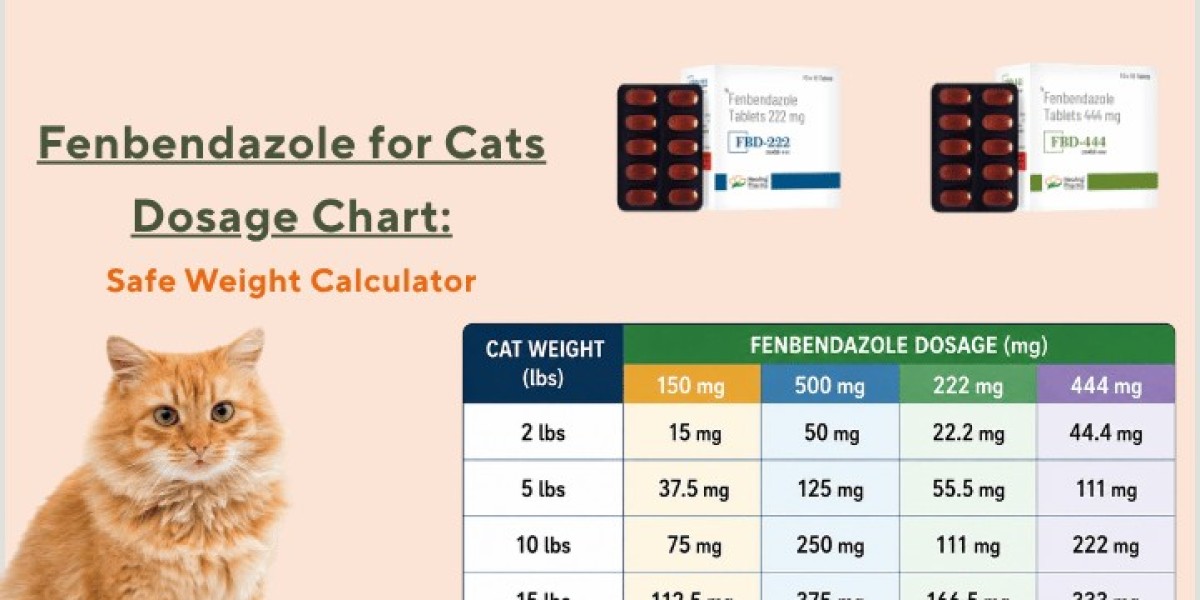
Fenbendazole is an antiparasitic medication used in veterinary medicine to treat certain intestinal worms and other parasitic infections in cats. Pet owners searching for a fenbendazole for cats dosage chart by weight should know that the correct amount depends on the cat's body weight, the parasite being treated, the specific product, and the dosing instructions provided by a veterinarian.
For general pet-health and medication information, medslike.com can provide useful educational resources. However, information found online should not replace veterinary advice. Fenbendazole products can have different concentrations and instructions, so calculating a dose simply from a cat's weight may result in an incorrect amount. A veterinarian can identify the parasite and determine whether fenbendazole is appropriate.
What is Fenbendazole?
Fenbendazole belongs to a group of antiparasitic medicines called benzimidazoles. It works against certain gastrointestinal parasites by interfering with processes that parasites need to survive.
Veterinary references list fenbendazole among medications that may be used against several intestinal helminths in cats. Depending on the product and country, it may be used against parasites such as roundworms, hookworms, and certain tapeworms.
The important point is that not every parasite responds to fenbendazole. A cat with diarrhea, weight loss, vomiting, or other symptoms may have an infection that requires a different medication or additional testing.
Fenbendazole for Cats Dosage by Weight
Fenbendazole dosing is generally calculated according to body weight, but there is no single dose that applies to every cat and every infection.
For example, the Merck Veterinary Manual lists 50 mg/kg by mouth once daily for 3–5 days as a commonly referenced fenbendazole regimen in cats for certain parasitic conditions.
Other veterinary products may have different labeled instructions. One currently listed veterinary product, for example, specifies 100 mg/kg as a single oral dose for routine worming in adult cats and dogs.
This difference demonstrates why pet owners should not rely on a generic internet dosage chart. The concentration of the product and its approved indication matter just as much as the cat's weight.
Example Weight Calculation
If a veterinarian has specifically instructed you to use a 50 mg/kg regimen, the mathematical calculation is:
Cat's weight in kg × 50 mg = amount of fenbendazole per dose
For example, a 4-kg cat would correspond to 200 mg under that particular 50 mg/kg regimen.
This is only a calculation example, not a recommendation for your individual cat. The veterinarian's prescribed dose, product concentration, treatment duration, and indication should always take priority.
Why Weight Matters
Accurate body weight is particularly important when treating kittens and smaller cats. Even a relatively small measurement error can represent a significant difference in the amount of medication administered.
A cat should ideally be weighed using an accurate pet scale. If a scale is unavailable, a veterinarian can obtain a more reliable measurement.
Avoid estimating weight based only on appearance. Two cats that look similar in size can have noticeably different body weights.
What Parasites Can Fenbendazole Treat?
Fenbendazole may be used against several types of worms in cats. Veterinary references list activity against parasites including Toxocara cati , Toxascaris leonina , and certain hookworms and tapeworms.
It has also been used as part of treatment for Giardia in cats. Merck Veterinary Manual identifies Fenbendazole for Cats Dosage Chart by Weight as an initial treatment option for giardiasis, while noting that there are no drugs specifically approved for Giardia treatment in dogs and cats in the United States.
Because different parasites require different treatments, diagnosis is important. A fecal examination may help determine which parasite is present and whether additional or alternative treatment is needed.
How is Fenbendazole Given?
Fenbendazole is administered orally. Depending on the product, it may be supplied as a paste, suspension, granules, or another veterinary formulation.
Always check the concentration printed on the product packaging. Two products may contain fenbendazole but have different amounts of active ingredient per milliliter or gram.
For liquid products, measuring the correct volume is particularly important. A household teaspoon is not an accurate substitute for a properly marked oral syringe.
Follow the veterinarian's instructions regarding whether the product should be given with food and how long treatment should continue.
Is Fenbendazole Safe for Cats?
Available veterinary evidence indicates that fenbendazole can be tolerated by cats when used appropriately. A published safety study involving healthy cats found no adverse reactions or significant pathological changes after administration at several tested doses, including doses higher than commonly used therapeutic amounts.
However, this does not mean that every cat should receive fenbendazole without veterinary guidance. The cat's age, health status, diagnosis, other medications, and the specific formulation should be considered.
Cats with ongoing vomiting, severe diarrhea, dehydration, weakness, or significant weight loss should receive veterinary evaluation rather than being treated solely with an over-the-counter or leftover medication.
Fenbendazole for Kittens
Kittens can be particularly vulnerable to intestinal parasites, and deworming schedules may differ according to age and parasite risk.
Merck Veterinary Manual describes fenbendazole as one possible treatment used in cats and kittens in certain shelter-medicine settings. It also emphasizes parasite-specific treatment schedules and repeat treatments where appropriate.
Because kittens weigh very little and can become dehydrated quickly, their medication should be measured carefully. A veterinarian should determine the appropriate product and dose for young kittens.
What If the Cat Misses a Dose?
If a dose is missed, do not automatically give a double dose. The correct response depends on how late the dose is, the prescribed treatment schedule, and the parasite being treated.
Contact your veterinarian or follow the product's official instructions for guidance. Keeping a written treatment schedule can help prevent accidental double dosing.
Important Safety Precautions
Before giving fenbendazole to your cat, consider these precautions:
- Confirm the cat's current body weight.
- Check the active ingredient and concentration on the product.
- Follow the veterinarian's prescribed dose and duration.
- Do not assume the dog dosage automatically applies to cats.
- Do not use a product intended for another species unless a veterinarian has specifically instructed you to do so.
- Use an accurate measuring device for liquid formulations.
- Keep medication away from children and other pets.
- Contact a veterinarian if unusual symptoms develop.
Some veterinary fenbendazole products specifically instruct users to determine body weight as accurately as possible before calculating the dose.
Final Thoughts
A fenbendazole for cats dosage chart by weight can be useful for understanding how veterinary dosing is calculated, but it should not be treated as a universal prescription chart. Different formulations and parasite infections can require different doses and treatment durations.
Veterinary references include regimens such as 50 mg/kg once daily for several days for particular conditions, while some approved veterinary products use different dosing instructions.
For the safest approach, have your cat's parasite identified and confirm the exact product, concentration, dose, and treatment duration with a veterinarian. Accurate dosing can help ensure effective treatment while reducing the risk of medication errors.