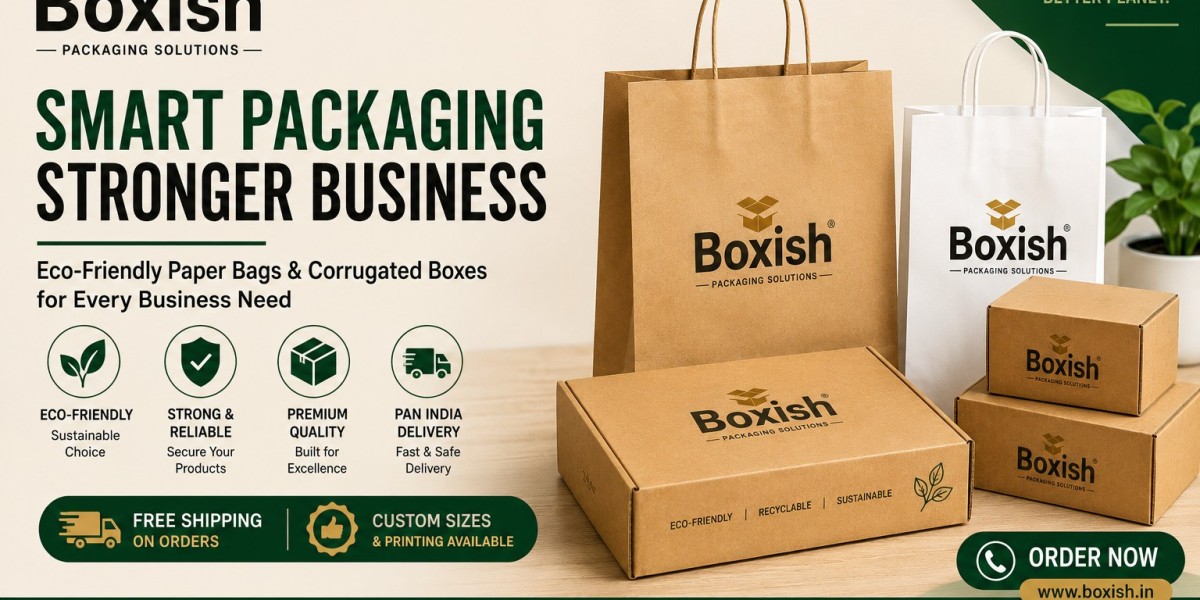
Sustainability is becoming an important consideration for businesses that want to reduce unnecessary material use while maintaining efficient logistics. Packaging has a major role in this process because products often travel through several stages before reaching the final customer. Choosing practical packaging can help businesses manage material consumption, transportation, storage, and product protection more efficiently.
Corrugated carton boxes can support more sustainable supply chains when they are selected and used thoughtfully. Their value comes not only from the material itself but also from how businesses design, size, store, transport, and manage packaging throughout its useful life.
For Indian ecommerce brands, retailers, manufacturers, and distributors, sustainable packaging should focus on measurable improvements rather than simply making environmental claims.
Why Packaging Matters in Supply Chain Sustainability
A supply chain involves much more than moving a product from a warehouse to a customer.
Packaging influences:
Product protection
Warehouse storage
Transportation volume
Handling efficiency
Consumable materials
Product returns
Packaging waste
When packaging is poorly designed, businesses may use more material than necessary or experience higher product damage.
A more efficient packaging system can help reduce avoidable waste while supporting reliable product delivery.
Right-Sized Packaging Can Reduce Material Use
One of the simplest ways to improve packaging efficiency is to select an appropriate box size.
An oversized carton requires more material and may leave considerable empty space around the product. Businesses may then need additional filler to keep the product stable.
Right-sized packaging can help reduce:
Excess cardboard
Internal filler
Storage requirements
Package volume
Unnecessary handling
However, reducing size should never compromise product protection. Fragile products still require sufficient space for appropriate protective materials.
Efficient Packaging Can Improve Transportation
Package dimensions can influence how efficiently goods are transported.
When businesses reduce unnecessary package volume, more products may potentially fit within available transportation capacity.
This can be particularly relevant for ecommerce businesses shipping large numbers of relatively lightweight products.
Businesses should review:
Package dimensions
Actual weight
Volumetric weight
Number of packages per shipment
Transportation requirements
The objective is to create packaging that protects the product while avoiding unnecessary external volume.
Use the Appropriate Board Strength
Sustainability does not necessarily mean using the least amount of material possible.
A package that is too weak may result in damaged products, returns, and replacement shipments. These activities can create additional transportation and packaging requirements.
Businesses should therefore select board construction according to the product.
Consider:
Product weight
Fragility
Stacking
Delivery distance
Handling conditions
Storage duration
The best specification is generally the one that provides adequate protection without unnecessary material.
Reduce Product Damage
Product protection is an important part of sustainable supply chain management.
When a product arrives damaged, the business may need to:
Send a replacement.
Provide another package.
Arrange additional transportation.
Process the return.
Dispose of damaged goods or packaging.
This means that insufficient packaging can create more waste than appropriate packaging.
Businesses should therefore evaluate sustainability alongside product protection rather than treating the two as separate objectives.
Optimize Internal Protection
The outer carton is only one part of a sustainable packaging system.
Internal protection can prevent products from moving excessively during transportation.
Depending on the product, businesses may use:
Paper cushioning
Inserts
Dividends
Partitions
Protective wraps
The right solution depends on product fragility and shipping conditions.
Businesses should test different combinations to determine the minimum practical protection required.
Standardize Common Packaging Sizes
Too many packaging sizes can make inventory management difficult.
A business might end up with cartons that are rarely used while frequently used sizes repeatedly run out of stock.
Creating a standard range can help simplify:
Procurement
Storage
Staff training
Inventory control
Packing operations
For businesses that buy corrugated boxes , analyzing order history can help identify the sizes that should form the core packaging range.
Specialized cartons can still be maintained for products that genuinely require them.
Improve Warehouse Storage
Sustainable packaging also involves managing inventory efficiently.
Cartons purchased in large quantities need suitable storage conditions. Poor storage can result in damaged packaging that cannot be used.
Businesses should protect packaging from:
Excess moisture
Direct exposure to unsuitable conditions
Excessive stacking pressure
Physical damage
Unnecessary handling
Packaging should also be organized by size and frequency of use so employees can access the appropriate materials efficiently.
Reduce Packaging Inventory Waste
Over-ordering can create another form of waste.
A business may purchase thousands of cartons for a product that later changes dimensions, is discontinued, or experiences lower-than-expected demand.
Before placing large orders, businesses should consider:
Current sales
Expected growth
Product lifecycle
Seasonal demand
Storage capacity
Supplier lead time
Smaller, more frequent orders may sometimes be more practical than maintaining excessive stock, depending on supplier terms and transportation costs.
Choose Suppliers Based on Consistency
A sustainable packaging strategy requires reliable supply.
A corrugated box supplier should be evaluated on factors such as:
Consistent specifications
Product quality
Available sizes
Manufacturing capacity
Delivery reliability
Order flexibility
Repeat-order consistency
Consistent packaging reduces the likelihood of receiving unsuitable cartons that cannot be efficiently integrated into an established fulfillment process.
Consider the Full Packaging Lifecycle
Businesses should avoid evaluating packaging based only on the moment it is purchased.
A broader view considers:
Production → Storage → Packaging → Transportation → Customer Use → End-of-Life
Each stage can reveal opportunities for improvement.
For example, reducing package dimensions may lower storage and transportation requirements, while appropriate product protection can reduce replacement shipments.
This lifecycle approach provides a more realistic view of packaging efficiency.
Paper Bags Can Serve Different Supply Chain Needs
Not every product needs a shipping carton.
Retail businesses may use a paper bag for customers collecting products from a physical store or carrying purchases after an in-person transaction.
Using the appropriate packaging format for the specific fulfillment method can help avoid unnecessary packaging.
A shipping carton and a retail carrying bag serve different purposes, so businesses should evaluate them separately when planning their packaging inventory.
Food Businesses Need Product-Specific Packaging
Food businesses also need to consider sustainability without compromising food quality.
Restaurants may require packaging that manages heat, moisture, grease, ventilation, and handling.
For example, pizza boxes for restaurants should be selected according to pizza dimensions, product characteristics, and delivery conditions.
Using a package that is unnecessarily large can increase material and storage requirements, while insufficient packaging can affect product presentation and quality.
Delivery Conditions Matter for Food Packaging
Restaurants and cloud kitchens should test packaging under realistic delivery conditions.
When selecting pizza boxes for delivery , businesses should consider:
Product fit
Box structure
Ventilation
Stacking
Delivery bag compatibility
Storage requirements
A package that performs well in the kitchen may behave differently during transportation.
Testing can help businesses identify the most appropriate structure before purchasing large quantities.
Bulk Procurement Should Be Based on Demand
Restaurants with predictable order volumes may benefit from purchasing packaging in larger quantities.
However, before they buy pizza boxes , they should analyze actual consumption.
A simple forecast can consider:
Average daily orders
Popular pizza sizes
Weekend demand
Seasonal events
Promotional campaigns
Current stock
This helps businesses maintain sufficient packaging without creating excessive inventory.
Measure Packaging Waste
Sustainability improvements become more useful when businesses measure them.
Track:
Damaged cartons
Unused packaging
Incorrectly selected sizes
Excess filler
Packaging consumption
Product damage
Returned shipments
Suppose a business discovers that a particular carton size is frequently discarded because it does not fit its products correctly. Replacing that size with a better option can reduce waste more effectively than simply purchasing fewer cartons.
Example: An Ecommerce Business Reduces Packaging Waste
Consider an ecommerce company selling household products.
The company initially uses several oversized cards because they are convenient to purchase in bulk. Smaller products require significant filler, while the cartons occupy considerable warehouse space.
The business analyzes its order data and identifies its most frequently used product dimensions.
It introduces a smaller range of appropriately sized cartons and adjusts internal protection according to product fragility.
The business then monitors packaging consumption, shipping dimensions, and damage rates.
This creates a more efficient packaging system without simply reducing material at the expense of product protection.
How Boxish Fits Into Sustainable Packaging Planning
Boxish provides packaging solutions for ecommerce, retail, food, and other business applications.
Businesses can select different formats according to their specific supply chain requirements, including corrugated cartons for transportation, paper bags for retail carrying, and food packaging for takeaway operations.
The important principle is to match packaging with the product, fulfillment method, storage environment, and transportation conditions.
Pro Tips for More Sustainable Packaging
Measure Before Changing
Use actual product and shipping data to identify where packaging waste occurs.
Focus on High-Volume Products
Optimize packaging for products that account for the largest share of shipments.
Avoid unnecessary empty space.
Choose practical dimensions while retaining sufficient room for protection.
Don't Under-Pack Fragile Products
Preventing product damage can be more sustainable than aggressively reducing packaging.
Review Inventory Regularly
Identify packaging that is slow-moving or no longer suitable.
Test New Packaging
Use real products and realistic handling conditions before large-scale procurement.
Track Total Impact
Consider material, storage, transportation, damage, returns, and replacement costs together.
Conclusion
Corrugated cartons can contribute to more sustainable supply chains when businesses use them as part of a carefully planned packaging system. The greatest benefits often come from practical improvements such as right-sizing, appropriate board selection, efficient storage, reduced product damage, and better inventory management.
Sustainability should not be treated as simply using less packaging. The goal is to use the right amount of packaging for the right product and supply chain requirement .
For growing Indian businesses, combining packaging data with regular testing and demand forecasting can help reduce avoidable waste while maintaining product protection and operational efficiency. A thoughtful packaging strategy can therefore support both environmental goals and better supply chain performance.